 + 1-888-827-0150
 + 44-20-3006-2750









sample essay cover page
Homeless Teen Graduates High School
Nora Perez wants to become an FBI agent—up until about a year ago, this seemed like an impossibility given the fact that the teenager lives in her parked car. Last week, however Ms. Perez was able to take a staggering step into the possibility of her desired future: she was able to graduate from high school. Nora Perez and thousands of homeless LA teenagers like herself have benefitted from the Los Angeles County Unified School District’s (LAUSD) Homeless Education Program. The program doesn’t just make sure that homeless teens have access to the state’s free education—they make sure that they have the means to be able to attain it. They help homeless teens out by giving them the day-to-day resources that they need to be able to go to school and study well. These include backpacks, school supplies, portable hygiene kits and access to wellness centers which provide the homeless teenagers with showers, physical and mental health check-ups as well as consultations regarding their different career options. There are currently around 13,794 homeless teens covered by the LAUSD’s program.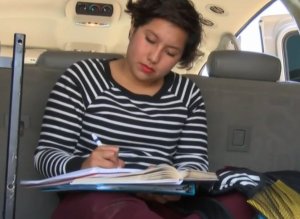
Nora Perez, in particular, is a very persistent and ambitious young women who just so happens to go home to a parked car. In an interview with PBS, she says that she is dedicated to making her dreams come true. The teenager, who just recently received her high school diploma says that whenever she thinks of giving up, she thinks about other students like herself who have the odds stacked against them and how at this point, they just don’t have the option of giving up. Debra Duardo, the executive director of Student Health and Human Services Department at LAUSD says that it’s kids like Nora who inspire them to keep improving the program—she goes onto say that many of their students are going to college and getting scholarships for 4-year-courses, eventually allowing them to better their lives.
Ms. Perez says that the program was able to help her feel like it made a difference whether or not she succeeded and that having a support system like that really provided her with the motivation to go on. However, she does acknowledge that she has a long way to go before she reaches her dream of becoming an FBI agent—there’s the training program and having to attain her bachelor’s degree. Now that she’s equipped with a high school diploma, she’s looking for part-time jobs that can help her get into college and hopefully, will supplement a scholarship.
Nancy Gutierrez, the LAUSD Homeless Education Program coordinator says that Nora’s success can be attributed to two things: on one hand, the program’s support and on the other hand, Nora’s drive to succeed. She says that everything begins with giving the students and their success a sense of value: the first step toward improvement is letting them know that yes, it matters and yes, there are people to help you out. She says that the LAUSD’s program wants to empower homeless kids with the same opportunities that other students have. She also says that what they really want to do is to be able to interrupt the self-perpetuating chain of extreme poverty which they’re facing and which may lead them toward becoming demotivated and giving up on their schooling—which in turn, results in them sinking deeper below the poverty line. Ms. Gutierrez says that she wants more and more students to hear about the great things that Nora and those like her have achieved, despite the setbacks which they faced. She says that hopefully, in the coming five years there will be more than a hundred thousand students covered by the Homeless Education Program.
Essay Paper on Family Relationships
by Andrew Stanford
Family relationships are one of the main areas of study by psychologists with families being society main structural units. It is a common knowledge that children learn from parents and imitate their behavior. Research consistently shows that the consequences of parental influences on children’s psychological and emotional development are complex with both positive and maladaptive behaviors being able to influence every family member (Cummings, 1994).
Revolutionary New Learning App Released by the Museum of Modern Art
This week, the Museum of Modern Art (MoMA) released possibly its most progressive and interesting app yet. The Biophilia app is downloadable for free and aims to teach and inspire kids through cinema, philosophy and modern music—most specifically, Bjork’s music (whose album the program and app were named after). The program is called the Biophilia Learning Program and is part of MoMA’s learning collection. What makes it unique is that it teaches kids directly through the different mediums of art previously described. For example, one of the science lessons is taught primarily by listening to a song called “Virus”, the lyrics, melody and rhythm of which are used to describe the relationship between a virus and a cell.
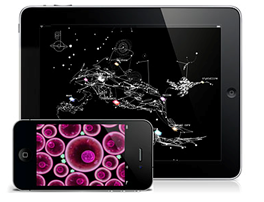 The experimental education program aims to teach kids how to develop their creativity through exploration. The app also has special features which reach out to kids who have special needs—the lessons are quicker and use more Special Education (SPED) learning techniques like alternating between topics and utilizing interesting visual aids. While it seems non-academic and informal, the meat of the lessons is the same (if not better and more varied) than typical learning settings. The curriculum was developed specifically for kids aged 8 to 15 years old—Paola Antonelli, MoMA’s Senior Curator of Architecture and Design says that they’re surprised with the response from the avant-garde learning module. Kids from all over Europe have downloaded the app since its release this month. Most commonly, kids using the app are from Oslo, Paris, Sao Paulo, Reykavik and Los Angeles.
Ms. Antonelli also says that what they hope to do with this app is to show kids that learning doesn’t just mean you have to know theories or that you have to be extremely cerebral about knowledge. The people at the Museum of Modern Art made sure to specifically choose songs, movies and clips that are experimental and which show people that trying new things or playing around with whatever is being learned—science, literature, history, math—encourages growth, both on a personal and academic level. She says that what they really want to do is to draw kids away from classroom settings and make them excited about acquiring new knowledge. While Bjork is one of the leading figures in the development for the app, the program was developed over a long period of time by different cinematographers, digital artists, musicians and even fashion designers. Paola Antonelli stresses that the app is the brain child of creative people who themselves have had a difficult time learning and who have found that one of the best ways to get to knowledge is to experiment.
However, the app was named after a Bjork album because the singer had been looking to release that LP as an app on which her listeners could do fun and interesting things. MoMA was able to take this idea to a new level, partnering with the Nordic Council for funding, logistics and web development.
In a world where the internet and gadgets are vastly demonized as education’s “enemy”, users say that this app completely shatters those contentions. The app is fast-paced, doesn’t dumb the lessons down and still manages to keep the kids interested. So far the app has been released in over 15 countries and its developers are looking to expand its reach significantly throughout the next year. Whereas most MOOCs still utilize the classroom template with regard to implementing online education, this revolutionary new learning app looks to create a platform for online learning which is entirely its own thing. This means great things both for education, the online learning format and for how certain subjects (e.g. Biology and Math) are viewed by kids and adolescents everywhere.
University of Chicago: Learning A Second Language Can Help Learning
A recent study conducted by the University of Chicago showed that over and above all these learning benefits, bilingualism helps individuals cope in the modern world. Along with being able to comprehend information at a faster rate and being able to solve problems, bilingualism also significantly increases one’s ability to multi-task and to make effective decisions. The University of Chicago says that this is because learning a second language is more rational whereas your mother tongue is more linked to emotion—the second language helps slow down knee-jerk reactions and allows one to take their time to contemplate choices. Sayuri Hayakawa, one of the lead researchers, says that this is very important information especially for college students who are often both extremely emotional and faced with a wide array of decisions. More studies and programs are currently being conducted by the University of Chicago, around which it means to base future programs to boost student performance.
 A lot of evidence has also surfaced to back this up. Recent studies conducted by the Department of Education in tandem with the Department of Health show that learning a second language can help learning. Aside from having multiple practical benefits like being able to navigate through a foreign country, being able to socialize globally and having the ability to outdo most people when it comes to basic trivia questions, a recent study by the Journal of Neuroscience that is being adapted in the US Common Core for pre-school showed that being bilingual also affects students’ ability to learn new concepts as well as to retain schema. The study showed that learning a second language from the age of 7 and below helps build an individual’s default cognitive flexibility whereas becoming bilingual from the ages 8 and up helps improve and expand one’s already existing ability to learn. This new knowledge is being utilized mostly in the pre-school realm but will soon be expanded into the grade school curriculum as well. Most high schools already implement second language classes.
This benefit also extends over a long period of time. The same study concluded that bilingual adults aged more gracefully. A separate study backs this up: in the 1950s, a test was done on school-aged children who spoke more than one language (mostly the children of migrants from foreign countries)—recently, the participants, now in their 70s were tested again for the same things. They were able to retain a lot of information which they took up in high school and college and only a minimal percentage were afflicted with dementia. While learning a second language may not be able to keep the effects of aging away permanently, it can delay it for a significant amount of time. This information is being used both by the educational and the health community.
Another study, this time conducted by the Psychological Science Journal showed that bilingual people are able to read faster and have a faster comprehension rate. Using eye movement tests, they were able to see that bilinguals spent less time reading and thoroughly understanding different paragraphs—most especially when a lot of words in the paragraph meant the same thing in both languages. For example, the word sport in English and Dutch. A brain scan also showed that bilinguals don’t just learn faster, they also use up less energy doing so because their synapses have been conditioned to learn at a moment’s notice.
The International Journal of Bilingualism recently published a study that is currently the basis of programs being developed for American schools. The study had 121 participants and were asked to solve the same math problems, identify the same abstract patterns (abstract reasoning test) and answer numeral sequencing items. The results showed that bilingual kids had better problem solving skills, regardless of how old they were and at what age they learned the language. Although as a general rule, earlier is better, studies are showing that learning a second language can benefit education no matter what age people start learning.
Arizona State University Teams Up With Starbucks to Spread Education
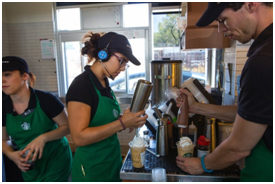 Through a rather odd partnership with Arizona State University, Starbucks will be offering a free online college education which results in the earning of a bachelor’s degree to all of its 135,000 employees across America. This program will be available to all employees who work at least 20 hours a week and who have the grades and test scores to be able to get into Arizona State. For baristas who have at least two years of college credit, the company will pay full tuition. For those who have less than two years’ worth, only part of the cost will be covered—however, this coverage is significant as it doesn’t disqualify them from availing of government and university aid, meaning they can still probably attain a mostly full scholarship.
The real clincher? Starbucks isn’t requiring their employees to stay after they’ve gotten their college diploma.
Jamie P. Merisotis, the president and chief executive officer of the Lumina Foundation (an organization that focuses mostly on education) says. Most companies that give some kind of educational benefit operate on a reimbursement policy or they have a non-separability clause for their employees, requiring that they stay at least four years. But now they’re offering an online university education that is going to be opening up doors for their employees—and they’re allowing them to walk through those doors.
Howard D. Schultz, the company’s chairman and chief executive says that they know that once they get their degrees, their employees will leave for better-paying jobs. And that’s okay—he says the point is to raise education rates, to empower good employees and to lower attrition. He says that benefits like this increase performance as well as attract and retain the right people: four years is still something.
Starbucks has become known for its odd behavior over the decades: doing things like providing health care insurance even for part-timers and giving its employees stock options. Despite or perhaps because of its employee-centered policies, Starbucks stock has sky-rocketed, closing at $74.69 last Friday.
Michael M. Crow, the president of Arizona State, is scheduled to join Mr. Schultz and Mr. Duncan next Monday to officially begin the opening of the program in a Starbucks assembly in Manhattan. Arizona State University has one of (if not the ) largest online degree programs in the United States with 11,000 students and 40 undergraduate majors to choose from. Theirs is also one of the most highly regarded diplomas because it is virtually identical to a degree gained offline. Mr. Crow says that Arizona State is prepared for a major surge in online enrollment—this program is special because employees who decide to take advantage of the education benefit will also get free academic advising and help with the processing of their paperwork. Tuition for Arizona State’s online undergraduate course is usually $500 per credit and it takes 120 credits to earn a bachelor’s degree.
Just as Mr. Schultz predicted, Starbucks employees are all a-buzz with excitement for the new program. Abraham G. Cervantes, 24, a part-time barista at Starbucks who also works as a musician at a studio and supports his mother and siblings in the San Pedro district of Los Angeles, says that the whole thing sounds too good to be true: and he’s all ears. Abraham’s passion is classical music—discovering Chopin, Bach and Beethoven while he was at Community College was one of the highlights of his life. He wants to eventually become a Professor of music and for so long, he thought that his dream was something which would have to be postponed indefinitely. He has high hopes for the program as he fits into the criteria which they require. Mr. Cervantes has his fingers crossed.
Tammie R. Lopez, 22, recently dropped out of college to help her dad earn a living for their family. When the recession hit in 2009, Tammie’s dad lost her job and they were on the verge of losing their home—so she stopped schooling and started working at Starbucks, her second job. A recent study showed that like Tammie and Abraham, 70 percent of employees at Starbucks want a college degree and were performing well at school but didn’t have the resources to continue.
Mr. Schultz says that he’s very eager to help young people who are willing to learn but don’t have the money for an education. He himself grew up in public housing in Brooklyn and was the first of his family to go to college—an athletic scholarship for baseball saw him through college at Northern Michigan University. Mr. Schultz and Mr. Crow met a few years ago at Arizona State when they were working with the charity foundation, Markle. Mr. Crow says that inflation and extreme capitalism has hollowed out the middle-class, driving more people into desperation. He insists that unless more people become educated, there is no stopping this social wreck.
10-Year-Old Graduates From High School
Last week, a 10-year-old student completed all the academic requirements for secondary education in Northern California. Tanishq Abraham, a boy genius from Sacramento with presidential, scientific and academic ambitions was one of the youngest Americans admitted to the high-IQ society Mensa which only accepts the upper 2% of the genius-scoring population and recently completed his secondary education.
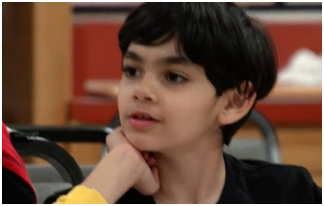 He was able to receive his high school diploma last Sunday at a ceremony held at the California Automobile Museum in Sacramento. Hailing from Sacramento, Tanishq left his local public school at age 7 and completed his early exit high school application and exam in March. He was supposed to get his diploma even earlier this year but the process was “delayed” because he hadn’t had enough time to dedicate to the ceremony and the logistics of the graduation itself. This was because he’d been taking classes at a local community college—something he’d been doing for the past year, even before applying for early graduation. Tanishq was home-schooled and received his diploma from the State of California.
Taji Abraham, Tanishq’s mother, says that her son is pretty much self-taught. While she and her husband did their best to teach him about biology, chemistry, calculus and trigonometry, she insists that her son’s aptitude for learning and drive for understanding is all his own. Tanishq’s father, Bijou works at a robotics firm while his mother Taji is a trained veterinarian.
Tanishq is currently interested in pursuing a career in science before eventually going on to become the President of the United States of America—he says it’s important to begin with science because he wants to find a cure to cancer. When asked about why he wants to become President of the United States, the young genius says that he wants to help people. He also adds that he definitely thinks it’s possible as one of his best strengths is that along with being extremely intelligent, he is also quite sociable—a combination one doesn’t see very often. This was further reinforced by a congratulatory letter which was sent to Tanishq by the White House via post.
Currently, Tanishq is also the holder of a short course on Astronomy from the American River College, which he completed at age 7. His mother says that she took the class with him and was astounded at the fact that whereas she had to struggle to keep up, her son seemed completely at ease with the pace of the class. She goes onto say that he ended up explaining things to her, instead of the other way around.
Tanishq’s next steps include completing his associate college degree at the American River College in the time between now and going off to the University of California at Davis in September. The Abraham family chose this school because it’s relatively close to where they live in Sacramento. When asked about the achievements of the young boy and the possible impact that this might have on education throughout the country, the Department of Education gave no comment, citing privacy rules.
Essay Paper on Whaling
by Jeremy Hoks
According to Australian researchers, in Australia, as well as some developed nations such as the US, it’s been only 30 years that whales are being treated differently from other animals. (Vozella, 2005) For most of the last century, whaling was just a very profitable fishery for those who invested in, and benefited from it.
Top 5 Ways to Read E-Books
 With the advent of smart phones, e-readers and tablets, you can now have access to all kinds of electronic publications no matter where you are. In this blog post, we thought we’d shed some light on the different ways in which you can read e-books to best suit your preferences and lifestyle! We’ve compiled a tiny list of the five best ways that you can get your reading fix no matter where you are or what you’re into. Keep reading and find out how you can take your favorite book, magazine or newspaper with you wherever you go!
