 + 1-888-827-0150
 + 44-20-3006-2750









essay writing help
British History Core Curriculum Globalized for 2015
Professor Peter Mandler, president of the Royal Historical Society says that this year, with the overhaul of the GSCEs, the history curriculum for British students will also be changing. In an effort to broaden the scope of what British kids know about history in general, they will now also be learning about other non-British occurrences throughout the ages. Professor Mandler says that they will not be doing away completely with anything, they will simply be adding more history about other non-typical western aspects of British history. Professor Mandler stresses that history is not just about things that have come to pass, it is also about the things that will come to be: nowadays, in a very globalized society, it is crucial for the kids to learn about history from other parts of the world, lest they become internationally inept.
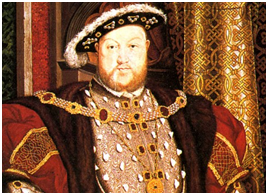 He also stresses that this curriculum will be very relevant to students throughout the country, seeing as how a lot of British migrants whose kids are currently enrolled in the public schools system are from Islam backgrounds. Professor Mandler says this will teach kids a lot about the more modern, diverse population that England has in the 21st century. He says there is simply less time to worry about what all the different King Henrys did.
The new history curriculum, which is going to take effect in 2015 along with the GSCE overhaul, is going to cover at least 200 years worth of events as opposed to the current 100 years being implemented throughout Britain today. Cumulatively, throughout secondary education, the new syllabus claims to cover about 1,700 years of British and world history—including the War of the Roses, the Tudors, the Civil War, the Georgians and Winston Churchill’s contributions to society. The other two-thirds of the lessons are going to focus primarily on non-British history, including Islamic history and the different Chinese dynasties. They’re also going to be talking about the Islamic Spring and the different ways in which history has affected other middle-eastern countries such as Lybia, Syria, Yemen, Tunisia, Egypt and Bahrain.
Also included is an entire module on Genghis Khan and his rule from 1167 to 1405. They will also be tackling different parts of history throughout Asia, such as Japanese history through the years 1853 to 1937 and the 150 years of rule change in China, including the beginning of communist rule. In an attempt to have a portion of history from each continent, the new history curriculum is also to include African kingdoms throughout the period of 1400 to 1800 and the rise and fall of the Mughal Empire in India during the years 1526 to 1739. Ultimately, this new comprehensive and holistic coverage also aims toward eliminating the widespread phenomena of very subtle British xenophobia, education officials say—this reluctance to learn about things that are un-British which has resulted from years of Brit-centered learning.
Mike Goddard, the OCR’s head of history says that the biggest criticism of the British History curriculum is exactly that it is too England-centered, with most of the lessons being centered around the western world about events which occurred in the 20th century—the Henrys and Hitler tend to become repetitive and can be learned in less than one academic year. Furthermore, Mr. Goddard says that in a survey taken amongst the top universities, they have been told that students with a background in pre-colonial, global history are preferred because they have a higher aptitude for understanding change. He goes onto say that the new curriculum is going to make the British history coverage less repetitive, more relevant and also encourages English kids to become more politically correct. More than anything, Mr. Goddard stresses that this new syllabus is going to encourage students to flourish in the global world—they will be equipped with knowledge, wherever they go.
Additional Math Classes For Teenagers to Be Implemented
Starting next week, all teenagers throughout the UK will be asked to take mandatory additional math classes every week. This is in keeping with the UK’s desire to match the scores of educational counterparts in the east such as China, Japan, Singapore, Hong Kong and Korea. All schools throughout the UK are being asked to ensure that these additional math sessions are at least 40 minutes long.
 This is not to be taught just per grade level but per age group which is how international tests select their students. The curriculum will include but not be limited to ratio, proportion and rate change. All students aged 14 to 16 will be made to take these mandatory extra courses on mathematics. Part of the stringent curriculum of these classes are going to be taken from the revised GSCE preparation plans which were supposedly to launch in 2015 which aim to teach kids formulae by heart.
Another aspect of the added math program is that it is going to employ more real-life problems such as economics word problems, problems having to do with basic statistics and problems which involve money and practical situations. The announcement which came out earlier this week said that this added math program is going to be an effort to expand, widen and deepen the youth’s understanding of arithmetic and why it’s important. The committee that came up with the program says that one of their biggest aims is to be able to match the standards set by their eastern counterparts: something that can only be done if they employ the same standards of discipline. Although they admit that these classes may take getting used to as it is much faster-paced than typical math classes, they believe that it’s for the best of the teenagers.
The members of the committee go on to stress that while the minimum is set at 40 minutes, they encourage schools and faculty to try and increase this as even with this minimum, the students throughout the UK still lag behind their eastern counterparts. An average of 138 to 145 hours of Math Lessons a year for Singapore, China, Hong Kong and South Korea has been the biggest seen factor to their acing the international exams held last April.
In the entire UK, an average of only 116 hours are devoted to math. Australia also bested the UK in the international tests with an average of 143 hours of Math Lessons per year. Elizabeth Truss, the Education Minister says that this new program will definitely put UK kids in the running to compete with their far eastern counterparts. She says that this is a crucial step in achieving the excellence which the GSCEs aspire toward. Professor Michael Sterling, a former teacher at Birmingham University says that this new curriculum is going to mean great things for Science, Technology, Engineering and Maths (STEM) students. One of the biggest problems with recent STEM students he points out, is their inability to perform and fathom manual math: something which presents greater problems in the future with regard to acceptance into higher education as well as finding means of employment.
After a few months of implementing these classes, similar classes will be considered for Chemistry, Physics and other important STEM subjects. A separate study conducted by the Independent Schools Council (ISC) showed that where UK does succeed with regard to the STEM curriculum, they do so only in the private education sector. These new additional lessons might well be the way through which the UK’s public education system is able to thrive and flourish.
Essay paper on Business Report
by John Darren
Environmental Control Systems Limited (ECS) was established in 1998 as a result of the need for Auckland Regional Council to outsource non-core activities and to streamline its internal operations. ECS is primarily responsible for bio-security and the eradication of harmful and invasive pests, such as possums, which carry bovine TB, and the painted apple moth that could have a negative impact on the Auckland region s natural environment.
Sheffield University Ranks Top for Student Experience
Gone are the days when the only priority in education was the academic aspect. Recent studies have shown that nowadays, with University leavers being top game for companies due to unconventional job descriptions, academic institutions have to offer much more than just good curriculum. They also have to offer enough experience—both professionally and personally, as the new demands of the workplace also require students to be well-rounded and emotionally sound.
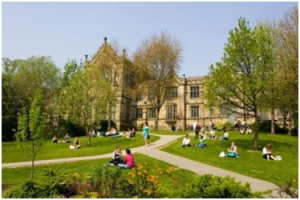 Today, the Times Higher Education (THE) and YouthSight released a study which interviewed 14,000 students from all over the UK, all full-time undergraduates across 111 institutions. This study has been running annually, for more than 9 years. The students included in the sample are asked to rate their school throughout 21 specific categories, including but not limited to factors such as the quality of lectures, staff effectiveness, social life, field connections and the ability to disseminate practical information.
The University of East Anglia, which took the cake last year, fell to third place in the survey released earlier today. The University of Bath, on the other hand was in sixth place previously and rose quickly to second place this year. One notable thing, Ben Marks, the managing director of YouthSight wrote in the report, was that colleges and University throughout London have consistently done poorly with regard to this yearly study. The bottom 20 are all comprised of institutions from London. The highest-ranking institution in London was the Imperial College London, in 43rd place.
The bottom ten are comprised of the London Metropolitan University, the University of the Arts London, London South Bank University, the University of Westminster, the University of East London and the University of Greenwich. Oddly enough, Mr. Marks writes in the report, despite the fact that London is well-known for its pubs and social life, even the social aspects of the surveys given to these universities were a flop. This is one of the aspects they will be focusing on in next year’s study—although he does note that this may have to do with the cost of living in London as well as the lack of proper housing for a lot of the students.
The study also contains certain reports on progress with regard to its significance. The study, which began in 2005, was originally meant to track the effectiveness of schools with regard to the experience factor (this was the very thing which made the study popular and which set it aside from other similar surveys). Back then, Mr. Marks notes, it was very difficult to get taken seriously with a selling point like that. But nowadays, this is information that universities can’t afford not to have.
Fiona Salvage, the Supplement Editor at THE says that this year’s scores and last year’s scores averaged at 75.5, the highest yet in recorded history. She says that while the aim is of course, to keep on getting better, for now she is glad that the scores have remained at a high. John Gill, the editor of THE, said that universities now are all seeking to improve their offered student experience because this is what the new, tech-savvy, personality-driven world is looking for. The competition for students now isn’t just national, he says—with international students having the capacity to study wherever they want, they are also competing with schools all over the world for great students.
Top place this year went to the University of Sheffield, which had the best Student Union and the best Student Experience. Other achievers include the Universities of Oxford and Cambridge (tied) for top quality of lectures and staff. The University of Bath also outdid itself, taking the top for Industry Connections along with the Imperial College London. The University of Sterling came in at the top for most improved Student Experience.
Russel Brand & Dizzee Rascal To Be Taught As Part of English Curriculum
In an effort to make English classes more relatable and “new”, Russel Brand and Dizzee Rascal are going to be added to the A-Level curriculum throughout England. Announced this month, the new curriculum will study delivery, technique and syntax for pop culture throughout England. Lessons learned about the work of the comedian and rapper are going to be asked on the top exams from here on in. Brand and Dizzee Rascal are going to be discussed alongside William Shakespeare, Charlotte Bronte and William Blake.
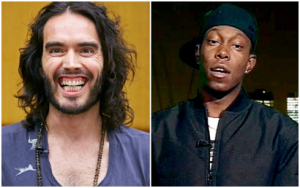 The OCR said that this change to the curriculum will help update the English A-levels. They say that this is going to help English students become more interested in their native language. The more modern content will help them become willing to study and analyze English through the lens of the 21st century. This radical overhaul of the English curriculum is what the OCR believes will set the English students of 2015 and beyond from other students elsewhere in the world.
The study material includes excerpts of Russel Brand’s appearance before the House of Commons, where he cracks jokes with the MPs and delivers speeches about drug addiction. Furthermore, students will be made to study and analyze London-born Dizzee Rascal’s News Night interview where he was asked to talk about what it meant to “feel British”. Also going to be added to the curriculum is journalist Caitlin Moran’s Twitter feed, speeches made by the artist Grayson Perry and newspaper columns written by The Secret Footballer.
The OCR is creating this class in tandem with the English and Media Centre. A representative says that this is going to be the most diverse A-level program, yet. The OCR and the English and Media Centre say that this new A-level is going to work in the interest of making a curriculum that is relevant, valuable and distinctive. Furthermore, they claim that the updated A-levels will provide firm grounding for the rigors of University and will allow students to have knowledge on the nuances of English that are practical.
This may well be true as the same bodies involved in the overhaul of the A-levels are being consulted by most major English universities for specifications and consultations on their exams and requirements.
While making major updates to the curriculum, the OCR and the English and Media Centre have also kept a lot of the classics of English literature such as George Orwell and Oscar Wilde. They will also be adhering to the traditional English qualifications of having to discuss six substantial texts, including at least three major works of prose, poetry or drama. Other updated additions which take on a heavier tone than Russel Brand and Dizzee Rascal’s body of work are the screening of the movie Twelve Years A Slave and Jez Butterworth’s award-winning play, Jerusalem.
Chris McGovern, a former head teacher and chairman of the Campaign for Real Education, says that this new program is simply the continuation of the drive educators have had to make education more accessible and trendy that has been ongoing for the last twenty years everywhere else in the world. His main concern with the program is how it will affect results and the global competitiveness of English students—will the students in Singapore, China and South Korea who recently topped classes be studying comedians and rappers? Should they be?
Barbara Bleiman, the co-director of the English and Media Centre addresses Mr. McGovern’s concerns by saying that their organization, which primarily provides training for teachers wants to achieve more than just inspiring and educating students, they would also like the curriculum to help inspire teachers to do their best to make classes fun and interesting to teach. They further stress that this more diverse curriculum allows for more activities and modern-day insights to create a more natural atmosphere between students and teachers. Ms. Bleiman further states that they are looking forward to seeing the exploration of a wide variety of styles, methodologies and genres.
The States with the Best Scores in the USA Announced
The advent of the website FindTheBest has made it very easy for parents and students to track down which states across the nation have the best exam scores. The site makes infographics based on reliable information inputted by different government agencies. Recently, they put out an infographic on education throughout the United States based on Scholastic Aptitude Test (SAT), American College Testing (ACT), Advanced Placement (AP) and National Assessment of Education Progress tests (NAEP) scores as provided by the department of education of each state.
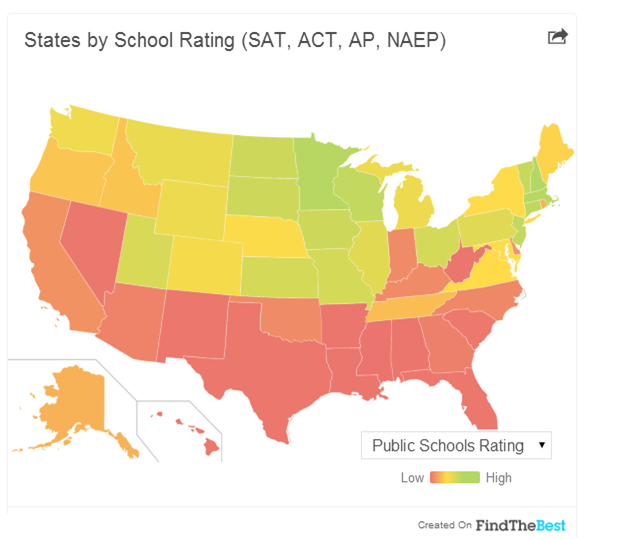
The Mason-Dixon Line, which was formulated in the 18th century by Charles Mason and Jeremiah Dixon to help settle a border dispute, is used to this day as a border convention (both in cartography and in conversation) that divides America into Northern and Southern hemispheres. Oddly enough, the Mason-Dixon Line also seems to hold some significance with regard to the test scores and corresponding Public Schools Ratings throughout the different states.
The results indicate that Northern American states (marked green/yellow on the chart below) have a significantly better Public Schools Rating than their Southern counterparts (marked orange/red on the chart above), with the exception of Kentucky, West Virginia, Rhode Island and Indiana (the very noticeable orange/red spots on the right side of the Northern American region, indicated above).
The highest-scoring states were Minnesota (4.92), Massachusetts (4.92) and New Hampshire (5.00). All three of these states are located in the upper half of the United States. Conversely, the states with the lowest scores are Nevada, Texas, New Mexico, Arkansas, Louisiana (all with a Public Schools Rating of 2.98) and Mississippi (2.97).
No clear pattern can be seen with regard to the proximity of these states to one another which ironically, also renders the Mason-Dixon Line viewpoint invalid. For example, the states that are on the border—specifically Arkansas and Mississippi—didn’t do any better than the states further south such as Hawaii or Alaska. This suggests that the north/south differences in scores may be incidental or having more to do with the different ways in which systems are implemented throughout those states, than it has to do with the specific location of a certain state. These are matters of progress that FindTheBest hopes to help the education sector visualize and map out so as to track educational progress throughout the coming years.
Another notable factor in the distribution of scores is that in the north, the way the states are divided makes it so that each of the states are much smaller, this indicates that the rate of the scores throughout one state in the Northern hemisphere of America means high results for a significantly smaller specific population. On the other hand, in the southern part of America, the states are very big, sprawling—thus, indicating that a higher group of people didn’t score well on these tests.
On the upside, however, upon tallying the final number of the states recorded, only 20 states didn’t do so well on the various student aptitude tests (orange/red) whereas 30 states did significantly better on the said tests. Despite the uneven nature of distribution of the US populace throughout these states, statistically we can see that a significant number of the population were able to get good grades.
Exercise for Lesson 7: How to Proofread Your Own Work
Instructions: In this exercise, we’re going to practice proofreading your own work. Below are instructions for writing certain paragraphs. After you’ve followed the instructions, proofread your work to the best of your abilities, by marking your draft and subsequently, providing a corrected version of the draft. Make sure that you save these drafts. You will need them for our next lesson’s exercise!
1. Write two short paragraphs comparing and contrasting two different things within the same category—for example, you may opt to compare cake and ice cream in light of which is the best dessert or you may want to pit wine and beer against one another as the best drink to drink at a birthday party. After you’ve finished writing your draft, use your knowledge about proofreading and proofreader’s marks to re-read and revise your work.
2. Write three paragraphs discussing your favorite animal. The first paragraph should introduce the animal—describe what kind of animal it is (e.g. canine, feline, etc.), how it behaves and how it looks. Next, you should talk about why you like this animal: what things does it represent for you? Did you have a pet like this once? What about this animal makes it your favorite (e.g. Pandas are adorable and fluffy!)? Your third paragraph should encourage the reader to write about their own favorite animal. After you’ve finished writing your draft, use your knowledge about proofreading and proofreader’s marks to re-read and revise your work.
3. Write a short paragraph about what you ate for breakfast this morning. The paragraph should consist of 5 to 7 sentences only. Discuss whether or not you liked your breakfast, as well as the reasons why. After you’ve finished writing your draft, use your knowledge about proofreading and proofreader’s marks to re-read and revise your work.
4. Write three short paragraphs about your favorite song at the moment. Each paragraph should consist of 5 to 7 sentences only. In the first paragraph, discuss the song, who sang it and how you discovered it. Next, dedicate a paragraph to what about it really strikes you—is it the melody? A certain lyric? What does it make you feel? How can you relate to it? After this, in the third paragraph, tell your audience whether or not you would encourage them to listen to the artist’s other songs: why or why not? After you’ve finished writing your draft, use your knowledge about proofreading and proofreader’s marks to re-read and revise your work.
5. Write a short paragraph about your favorite ice cream flavor. What about it do you like? Was it always your favorite ice cream flavor? Which brands do you think do the flavor the best? Do you have a recipe for it or do you just eat it plain? Limit this paragraph to 5-9 sentences only. After you’ve finished writing your draft, use your knowledge about proofreading and proofreader’s marks to re-read and revise your work.
Exercise for Lesson 6: How to Copyedit
Instructions: In this exercise, we’re going to be practicing copyediting with the corrected versions of the paragraphs which were provided in the previous exercise along with an introduction and a conclusion. Here, as copyeditor it will be your job to arrange these paragraphs in the best possible arrangement, according to the title and context of the article being written.
A Short Treatise on the Size and Characteristics of Whales
Blue whales are a kind of baleen whale. They swim in almost all of the oceans in the world. However, they nearly faced endangered status in the 1990s due to the rampancy of harpooning in the 20th century. This was put to a stop in 1996 by the international community. These days’ numbers of blue whales are looking up despite the plateau in their population which was reached two decades ago. Since then, the international community has been adamant about protecting this precious marine mammal.
The North Atlantic whale is one of tree right whale species that belong under the genus Eubalaena. Their main characteristics are a dark gray body, a rotund midsection, a v-shaped blowhole and an arching rostrum. They swim in the North Atlantic Ocean and grow up until 59 ft long. They are a migratory specie and travel during different times of the year—to mate, to give birth and to feed.
Whales are great creatures—since the 1800s, whales have been looked at with a kind of awe: man has long held a morbid fascination with the great beasts, so much so that whale watching has even become a legitimate hobby. Despite their seemingly similar appearances and the many difficulties that come with trying to observe and study whales, there have been a great many studies conducted on the speciation of whales in the past. Here, we’ll be taking a look at these different kinds of whales and how they differ in appearance and size.
The Humpback whale is one of the oddest kinds of baleen whales (if not whales in general). They have elongated fins, a humped back and a knobbly head. They are also one of the types of whale that are best known for breaching or moving over the surface of the ocean, to slam their bodies down over the top. This has made the Humpback whale very popular with the whale watchers of Australia and New Zealand. They grow to be 52 ft long.
Bryde’s whale is a whale that resides in warm, tropical waters. It is long and wide, with a very narrow body. It is characterized by three gray lines that run rostrally along its body. It is gray on top and usually white on the ventral (belly) side. These whales are also baleen whales and belong to the same family as the Humpback whales and grow to be 49 ft long.
In conclusion, we can say that each different kind of whale has its own charm. We can also conclude that the way a whale looks has a lot to do with its nature and the environment in which it lives—does it travel? Does it live in the same place year-round? What part of the ocean is it found in? These are all important questions to ask when we talk of the evolution and speciation of whales.
Fin whales are the second largest animal on earth, next to the Blue whale. They grow up until 88 feet long and can weigh up until 80 tons. They are the only asymmerically colored mammal, with the right side of teir lower jaw colored white and the left side of their lower jaw colored black. There are around 120,000 recorded Fin w hales in existence today. They are usually born at a wait of 4, 000pounds.
Exercise for Lesson 5: How to Proofread
Instructions: In this lesson, we focused on how to proofread. Here, we’re going to practicing our proofreading skills by practicing on a couple of informative paragraphs with errors inserted to them. The exercise below is designed to help you work on both your technical and analytical skills. Correct the paragraphs below to the best of your abilities! This will help train your eye for errors as well as help you practice consulting different references for information.
1. Blue whales are a kind of baleen whale. They swim in alm ost all of the oceansin the world. Howeverthey, nearly faced endangered stateus in the 1990s due to the rampancy of harpooning in the 20th century. This was put to a stop in 1996 by the international community. These days’ numbers of blue whales are looking up despite the plateau in their populaiont which was reached two decades ago. Since then, the international community has been adamant about protecting this precious marine mamal.
2. The North Atlantic whale is one of tree right whale species that belong under the genus Eubalaena. Their main characteristsics are a dark gray body, a rotund midsection, a v-shaped blowhole and an arching rostrum. They swim in the North Atlantic ocean and grow up until 59 ft long. They are a migratory specie and travel aduring different times of the year—to mate, to give birth and to feed.
3. The Humpback whale is one of the oddest kinds of baleen whales (if not whales in general) They have elongated fins, a humped back and a knobbly head. They are also one of the types of whale that are best known for breaching or moving over the surface of the ocean, to slam their bodies down over the top. This has made the Humpback whale very popular with the wale watchers of Australia and New Zealand. They grow to be 52 ft long.
4. Bryde’s whale is a whale that resides in warm, tropical waters. It is long and wide, with a very narrow body. It is characterized by three gray lines that run rostrally along its body. It is gray ontop and usually white on the ventral (belly) side. These whales are also baleen whales and belong to the same family as the humpback whales and grow to be 49 ft long.
5. Fin whales are the second largest animal on earth, next to the Blue whale. They grow up until 88 feet long and can weigh up until 80 tons. They are the only asymmerically colored mammal, with the right side of teir lower jaw colored white and the left side of their lower jaw colored black. There are around 120,000 recorded Fin w hales in existence today. They are usually born at a wait of 4, 000pounds.
Exercise for Lesson 4: A Copyeditor’s Job
Instructions: In the previous lesson, we were able to discuss the different aspects of a copyeditor’s job. We said that a copyeditor is mostly concerned with the overall content and format of the publication. Below are different paragraphs. Using the skills you learned in the previous lesson, decide which paragraphs you should keep and which ones you shouldn’t, based on the premise given and the content of the work. After this, list down the order in which the paragraphs should appear.
Why You Should Go Sulfate-Free
All-in-all, using products that are Sulfate-free helps you maintain the health of the environment as well as your overall hygiene and cleanliness. This leads to an eco lifestyle that is clean and green!
Sulfates are the main ingredient in shampoo, soap and household cleaning products which causes the liquid to foam or to lather. They allow the formula of the products to become easier to spread out and allow you to use less product for a larger surface area. However, the popularity of the Sulfate-free shampoo owes largely to a kind of false publication—early in 2008, a study claimed that Sulfate in shampoos causes cancer.
This can definitely take getting used to. I tried Sulfate-free shampoos by accident: I was staying over at my sister’s house by the beach for a couple of days and that was the only kind of shampoo that she had. I tried it, it didn’t later up and the only thing I could think was “her shampoo’s broken”. Despite the initial weirdness, I ended up liking the way that my hair felt that day: it was soft and it smelled nice and I didn’t have the usual problem that usually occurs as a result of swimming on a hot day—dandruff. Since I’ve made the switch, dandruff has become a thing of the past
While this was proven untrue, it gave rise to different studies which have found that Sulfates can make hair drier and can cause dandruff. This is why color-treated hair usually requires non-Sulfate therapy to maintain the style and sheen. The main drawback to Sulfate shampoos is the price tag: they are significantly more expensive than your “normal” shampoos. Plus, non-Sulfate shampoos don’t later up—something that is often associated with cleaning hair.
Another really great consolation for me was that Sulfate-free products are good for the environment. These days, climate change is a real game changer and so much damage has already been inflicted on the environment by people. Sulfate-free shampoos help prevent the contamination of rivers and other bodies of water because of their somewhat lower chemical concentration content. Just for this, I feel like going Sulfate-free is worth the hefty price tag that most shampoos like this carry.
As of late, the only drugstore brands to carry Sulfate-free shampoos is L’Oreal Paris. However, I feel like other major brands are going to end up adapting this as well. These days, I’ve noticed that more and more people have been getting into “organic” products and have really been taking the initiative to make the world a better place (while looking and feeling fabulous in the process).
