 + 1-888-827-0150
 + 44-20-3006-2750









123 help with essay
Jim Carrey Delivers Inspiring Commencement Speech at Management College
This year’s commencement exercises at the Maharishi School of Management in Fairfield, Iowa was given by the actor Jim Carrey, who has established himself as a giant both in comedy in drama with movies such as “Bruce Almighty”, “Liar, Liar”, “Yes Man”, “The Majestic” and most recently, “Kick Ass 2”. For the school, which is located in rural Iowa, the presence of the very highly esteemed actor at their commencement ceremony was very well appreciated. The trend of asking personalities known in other fields has been one that is isolated primarily in schools within city districts and usually ivy league institutions, at that—for example, J.K. Rowling’s commencement speech at Harvard and John Legend’s speech at the University of Pennsylvania.
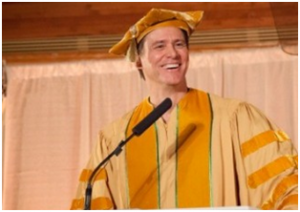 Mr. Carrey was chosen by the school’s faculty and staff as the speaker at this year’s graduation because of his practice of Transcendental Meditation—something which is taught at the Maharishi School to all of its students. Furthermore, Jim Carrey is the President and Founder of The Better U Foundation, which helps rural farmers attain financial and food security. The school administration says that they believed Mr. Carrey was the perfect person to talk to their students about what to expect from the real world, himself being someone whose success is a product of hard work and perseverance.
In his inspiring commencement speech, Jim Carrey gives the graduating class of 2014 some very inspiring, if rather unconventional advice. Moving away from the usual adages of talking about success, achievement and taking on the world, Mr. Carrey talked about far more fundamental values: he talked about love. The actor told the Maharishi School of Management class that the one thing that they need to do to win at life is to choose love over everything—he said that the only way to triumph over fear and the other challenges in this world is to love the people in their lives as well as their passions with everything that they’ve got, even when it’s difficult.
Further deviating from his Hollywood success and the usual glamour associated with tinsel town, Mr. Carrey went onto talk about his hopes that more young people these days would realize that their physical, material wealth only comes from their wealth within. In keeping with the transcendental theme surrounding the graduation, he states his belief that the spirit and body are separate entities which overlap: he reminds the class of 2014 to pay attention to the indicators of success both within them and around them—as people who are going to be involved in business and management, they should pay attention not just to the figures and to the statistics but the important questions like are you happy and do you love what you’re doing?
He talks about the need to view fear in a new light: that it will always be a big part of one’s life but that it shouldn’t be allowed to govern one’s judgments and decisions. Furthermore, Mr. Carrey goes on to say that the most common disguise which fear takes is practicality—not to say that practicality isn’t important but that a lot of people grow up and choose “practicality” without knowing that what they’re really choosing is the fearful choice. The actor, who was once rejected by numerous comedy clubs and organizations before he got his big break in the early 90s, urges this year’s graduates to follow their hearts.
Mr. Carrey ended his speech by acknowledging that failure in life is inevitable but that it is worth it if you fail in the interest of eventually succeeding at what you love. The students applauded Jim Carrey’s inspiring commencement speech, some of the students getting teary-eyed and others smiling widely as they listened to what the actor had to say.
The commencement exercises were held on school grounds last May 28th.
Homeless Teenager Graduates Valedictorian, Going to College
Griffin Furlong from Jacksonville, Florida has been named valedictorian of the 2014 class at the First Coast High School. While this might be an ordinary feat for most people, the same cannot be said for Griffin Furlong—he’s undergone strife that most teenagers haven’t.
 The newly named valedictorian lost his mother to cancer as a child and soon thereafter, Griffin, his father and his brother had to live in a homeless shelter as they were left almost penniless from all the cancer treatments. They lived this way for two years. CBS 10 News reports that homelessness was one of the factors which encouraged Griffin to work so hard at not just staying in school but doing well in school. Throughout the years, financial security at the Furlong home fluctuated. They moved into a new home after the shelter, but even then food was scarce and money was always a problem: a few weeks before graduation, the family went homeless again. Griffin tells WFTV9 that a part of him wanted to quit at that point—he feels that no one his age (or any age, for that matter) should have to go through that ordeal.
There has been no news yet of word from Griffin’s father and brother. However, after they lost their home, Griffin had to live at his girlfriend’s house for two weeks before moving in with his aunt and uncle. Startlingly, the young man’s grades didn’t slip a fraction: he managed to maintain his 4.67 CGPA throughout the entire ordeal of moving from house-to-house throughout the turbulent weeks leading up to graduation. On June 4th, Griffin will don his cap and gown and graduate from the First Coast High School at the top of his game. When interviewed by CBS 10, Griffin said that he had no option but to succeed—he knew what was important to him and he wouldn’t let anything take it away from him: his grades are his future; he says that he is doing this for himself, for his mom and for the rest of his family—he goes on to say that this is the only way to make sense of everything that they’ve been through.
The challenges seemed far from over for the formerly homeless teenager—Griffin Furlong plans to attend Florida State University and pursue a degree in Civil Engineering. However, he cannot afford the pricey tuition fee and has had no luck with financial aid yet. In the past 7 days, using the crowd funding resource GoFundMe, Griffin’s woes have come to an end. When he began his campaign, he set a target of $20,000 for his tuition fee, mentioning in his pitch that he hoped not to have to go into debt to attain his college degree. Today, a week before graduation Griffin’s funds raised has far exceeded that number at $28,268.00. The young man says on his page that he is filled with relief, gratitude and excitement to finally be graduating and to have the means to pursue a college degree. He says thank you to everyone who has supported him and looks forward to the end of his long-standing feud with poverty.
Harvey Mudd College Makes History
Harvey Mudd College in Claremont, California is one of the top engineering schools in the entire country. They recently made gender equality history by awarding 56% of their Engineering degree diplomas last week to women students. This is the first time that this has been done in the field of engineering and the sciences, mostly male-dominated fields. The overall graduate ratio across all majors at Harvey Mudd College last week was 49% female to 51% male—these close numbers are encouraging for male and female students and administrators.
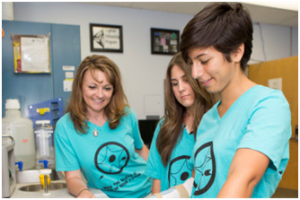 Harvey Mudd President Maria Klawe said that she and her administration really campaigned toward encouraging a good number of women to take up STEM courses while also allowing their male students to continue to excel and develop in the field. Ms. Klawe was also the first woman to lead the college in the 60 years that Harvey Mudd has been running. She stresses that it doesn’t have to be one or the other—both men and women are relevant to the sciences.
Elizabeth Orwin, professor at the Engineering College and incoming Engineering College Chair, says that the reason why Harvey Mudd College has grown so popular in the last few years is because they accept students and faculty from both genders, giving all students role models to look up to. She also says that since Maria Klawe took over as president in 2006, they have come up with different experiential programs which help uplift their students and give them confidence that they can perform in the field.
Ms. Klawe states that this is very important to her as someone who felt very out of place during her college years when the ratio of female to male students in STEM courses was significantly bigger—while male classmates can be very nice and direct isolation of women was very rare, she says that for herself and fellow female classmates growing up in a male dominated field, they felt like they weren’t really successful or like they were simply being impostors. They felt they were playing pretend at being successful because they didn’t measure up to their role models, who were mostly male.
Ms. Klawe has held many prestigious positions throughout her career—being the former Head of Computer Science and then the Dean of Science at the University of British Columbia and after that the Dean of Engineering at Princeton University. She said that when she was appointed the President of Harvey Mudd College 8 years ago, she made a promise to herself that she would make the environment one where students of all genders would feel welcome and like they had legitimate chances at becoming successful scientists and engineers.
Harvey Mudd also has the most female professors in its faculty of all the leading engineering and science colleges throughout the United States. Ms. Orwin states that this has helped balance out the way that pupils see the STEM fields—it legitimizes the role of women in the fields of science and gives all their students a real feeling of accomplishment upon graduation. The overall gender ratio of Harvey Mudd College is also one that is rarely ever heard of when it comes to Engineering and the Sciences. While it is still mostly male populated, the figures for a more-or-less equal population of men and women studying STEM courses is promising: Harvey Mudd College is comprised of 42% women students, faculty and staff and 58% men who are enrolled, employed and teaching at the academic institution—a closer call than other leading STEM institutions.
Essay Paper on The Imaginary Indian: The Image of the Indian in Canadian Culture
by Sylvia Birence
The images of Indians are intrinsic in Canadian culture. Since 1850 these images have been presented in a variety of different ways in a multitude of sources. 19th century paintings, Mounted Police members’ stories and memoirs, various TV shows, performances of speakers and writers of the native and non-native background – this list of sources of information about the Native culture is far from complete.
Essay Paper on Strategies Employed by Market Followers
by Cindy Schenn
There are many reasons for companies to be the first to offer new products and services. But there are many cases when approach is not practical. Sometimes companies don’t have the resources to develop the new technology on their own. There also could be problems with the technical potential of the new technology.
University of Michigan Opens Official Napping Area in Library
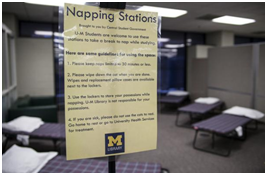
While traditionally, libraries are seen as places to study, the University of Michigan has addressed the issue of students sleeping in the library by opening an official area where students can nap. Officials of the University of Michigan say that libraries are supposed to be stations for learning—and sleep deprivation, especially in the college setting, is one of the most common blockades to learning. The new napping areas opened last month, right before finals week and are currently up and running. The nap area is expected to be full again this coming month, with finals and summer term coming up.
 The idea for the official napping area was proposed by Engineering junior Adrian Bazbaz, a Central Student Government (CSG) representative. Being an engineer-in-the-making, Mr. BazBaz himself is one of the 24-hour library’s most avid visitors. On trips there, he noticed that a lot of kids would fall asleep on the desks or would end up lying down on the floor, between the shelves.
The napping area, located on the first floor of the library are intended for 10 to 30 minute naps. Currently, there are cots in place—these are not the original beds ordered by the CSG but they wanted to open the napping area in time for finals week, so these will remain until the better beds arrive. Every cot rented out will come with a locker where kids can keep their things; this locked comes with wipers with which they can wipe down the cot, to ensure good personal hygiene.
The CSG took a survey of 4,000 students who all said that sleep deprivation was one of their biggest problems and that the place where they went to rest most often was the library—sometimes, this “rest” was involuntary and they would end up falling asleep while they were studying. For the project to be credible, they brought in the expertise of Shelley Hershner, M.D. who is an expert in sleep science and research. Her studies influenced the gravity and quality of the CSG pitch, solidifying the argument that sleep is a necessity to the students’ physical and mental health. The nap space hopes to educate students about the dangers of sleep deprivation and how pulling all-nighters can be detrimental to their health and capacity for learning.
Adrian Bazbaz says that since the University aims to educate students in all aspects of life and steer them away from things which might hurt them, this is naturally the next step to take. He says that there are countless ongoing campaigns for the dangers of alcohol and drugs and so there should be something to warn against sleep deprivation which heightens the risks for stroke and lowers a person’s immunity significantly. Sleep is one of the body’s basic needs—it would be ludicrous not to say something about an issue that is so significant and that affects such a high number of the population.
The sleeping space only has 3 rules: that the beds only be taken at 30 minute intervals so that everyone can get a chance to rest, that the students wipe down the cots after and that students who are sick/contagious go to the clinic to rest, instead so as to avoid the spread of germs.
A similar project was recently undertaken by the University of Boulder Colorado, where they opened up a Sleeping Spot on campus (this was, however, not in the school library). Harvard University students proposed something similar in 2013—the program is still being evaluated.
The plan has so far been a success at the University of Michigan, with the post garnering more than 50,000 likes on the CSG Facebook account. The CSG are now taking steps toward opening up a second napping station in the North Campus, at the Duderstadt Center. Irene Suh, a sophomore and one of the members of the CSG who worked closely with Adrian Bazbaz on the project says that the survey they took showed that the average UM student only slept 4 hours every night—something that these nap stations hope to change.
Essay Paper on Sexual Abstinence
by Mary Dobson
The term ‘abstinence’ means the ability to do without something. In this context the paper is going to consider on the question of sexual abstinence. A lot of people all over the world have sexual relationships with their partner or partners. But on the other hand there is also a great deal of people that have decided to abstain from sex and wait until marriage. To begin with, the question of virginity as the way of sexual abstinence is going to be discussed.
Scotland Universities a Model for Interactive Learning Lectures
A recent study conducted across 200 tertiary education establishments (colleges, academies and universities) and 15,000 undergraduate students throughout England have shown that the traditional university lectures are being done away with to make room for interactive and student-centered type teaching. Traditionally these lectures featured 500 students per room in a large auditorium with slides being flashed on large projectors toward the side of the lecture halls.
 The recent study conducted by the Higher Education Policy Institute shows that these have become obsolete, with attendance dropping below 20% in 2013 for universities who still employed these material-centered lectures. When asked in a survey about their absences, students said that it was due to the availability of teachers’ notes online—why attend a class where you’re hardly paid any attention anyway and compete with other people to take notes when these notes are available online?
David Willets, the Universities Minister, says that this feedback is of the utmost importance when it comes to giving schools, academies and universities feedback. The hodge-podge insertion of technology into the educational system makes it very difficult for both in-person lectures and technological learning platforms to be effective. Mr. Willets says that if they are going to be pursuing either, traditional university lectures need to be set aside to make room for new, well-integrated interactive lectures with smaller classes which treat the academic experience as something more than just note-taking.
As a response to this, several educational establishments including some of the top schools throughout the UK have been coming up with new programs that allow students to gain a first-hand experience that will keep them coming to class. A good example of this is Sheffield University which was deemed by another study as the top school for the student experience in the entire UK.
Scotland is one of the countries in the UK with the highest attendance rate; 70% of Scottish university students attend their classes on a regular basis. The study showed that despite the fact that Scottish university education is supposedly “less premium” than British education because Scottish kids go to school for free and receive a monthly stipend, more than 68% of Scottish university students say that schooling is worth every shilling they spend on education whereas in England, only 41% responded this way.
Universities in Scotland have been noted to have more out-of-the-classroom activities such as field trips, seminars and observational lectures where they are exposed to different kinds of stimuli—these alternative classes are backed up by days during which physical attendance is not required to give them time to work on their synthesis essays which are to be uploaded online. This balances out the need for one’s physiological presence in the classroom and the utilization of modern technological platforms such as TurnItIn and various university-specific platforms.
Mr. Willets says that he, along with the other esteemed faculty and staff of universities throughout England will be looking to Scotland and Sheffield University as they come up with a new model for how lectures in this modern age should be conducted. As of late, Mr. Willets and the top universities in England such including Oxford and Sheffield have been coming up with programs that will be pitched and suggested as they are consulted by the Universities Minister. Mr. Willets says that looking for a way to best integrate the personal and technological aspects of education when coming up with new programs and methods that will enrich the educational experiences of students throughout England is their top priority in 2014.
Cambridge Implements Quality, Not Quota System
Cambridge University’s admissions rate has dropped significantly this year—especially in terms of students who were admitted. The rate of admissions has dropped to 60% and of that number, the number of students from state schools is down to 61% from the usual 63%. Cambridge, which is usually known for its high state school admissions rate has recently begun to implement a quota system. Recently, the university spent £4 million on a reach out program wherein they scouted different state schools for exemplary students who are gifted, talented and are from disadvantaged households. Whether this has impacted the lowering of the rate of student admissions, university representatives have yet to say—although they deny a quota system with regard to stopping admissions at a certain rate, they do implement a quality system.
 As a rule, all universities are supposed to find ways—mostly by setting a minimum quotient to be met and implementing different programs—to help encourage students to apply for university despite 2012’s £9,000 implementation of tuition. Mike Sewell, Cambridge’s director for admissions says that the “new” system was just a way of reiterating something which Cambridge has implemented from the very beginning. He stresses that Cambridge University has been and always will be an incredibly selective institution and has always had a quota with regard to the grades and qualifications of their students, if not in the quantity of students admitted: therefore, the drop in the rate of admissions may have been due to the quality of the applications and not necessarily a general change in the atmosphere of Cambridge’s admissions department.
In fact, Professor Les Ebdon, who has been a staple adviser to numerous other institutions over the years and who is currently the head of the Office of Fair Access, stresses that up until this year, Cambridge had a rising admission rate. He says that Cambridge not admitting as many students falls below that increase curve but is still in keeping with the norm of UK universities for admissions and keeps the encouragement factor intact. He says that despite their quota system (which is more concerned with a bottom line than a ceiling against which admissions end) and the fact that Cambridge University can be very stringent with applications, they are definitely one of the fairest institutions when it comes to admitting students.
Mr. Sewell adds to this conversation, assuring the students, their parents and advisers that all of the applications were looked at both holistically as well as on academics alone. This data was also run past an evaluation which considered the major they were applying for and how well they would do, should they be admitted. Furthermore, he says that their targets are well within both their own and national standards—in fact, they are above their 2011 admissions rate which is surprising given the fact that 2011 was part of the pre-£9,000 tuition era. Lastly, he says that the fluctuations in Cambridge University’s admissions rates are testament only to the fact that they value the quality of their admissions over getting a good reputation for admitting a lot of students who eventually drop out or don’t make it—their commitment is to education, not to quotas or meeting targets set to justify tuition fees. At Cambridge, Mr. Sewell says, all students are accepted for their hard-earned qualifications and based on their own merit.
The number of applications to Cambridge University hit an all-time high this year, with 16,185 people applying and only 3,371 being accepted. The number of state school students admitted was 61%, whereas those from independent and private establishments was 38.6%—higher than the previous year’s rate which was 37.6%. Cambridge assures the public: these numbers are significant but random and most definitely not outside the set norm.
Coming Up With Fun Topics to Write About
One of the biggest challenges we encounter when writing is deciding what to write about—even if there are a lot of topics that interest us, a lot of the time when we set out to write them, our minds go blank. In this post, we’re going to be helping you channel the creative writer in you. Here you’ll see how you can channel your interests so as to improve your writing! This fun list contains different things you can do to come up with fun, exciting and interesting topics that are fun to both write and read about! Keep reading and discover what we’ve got in store for you!
